
Andrei Mesinger
Full Professor of Astrophysics and Cosmology,
European Research Council Laureate,
Department of Physics and Astronomy, University of Catania
Email: andrei 'dot' mesinger 'at' unict 'dot' it
Full Professor of Astrophysics and Cosmology,
European Research Council Laureate,
Department of Physics and Astronomy, University of Catania
Email: andrei 'dot' mesinger 'at' unict 'dot' it
I am a theorist studying the emergence of the first astrophysical objects and the epoch of cosmic reionization. A million years after the Big Bang, the Universe was cold, dark and nearly devoid of structure. These Cosmic Dark Ages ended roughly a hundred million years later with the Cosmic Dawn, when the first stars, black holes, and eventually galaxies formed. Radiation from these early galaxies propagated through space, heating and ionizing the surrounding gas and culminating in the last major phase transition of the Universe: the Epoch of Reionization.
These cosmic milestones span the bulk of our observable Universe, with current and upcoming telescopes providing datasets of unmatched scientific potential. My research aims to answer, “What can we learn about the first galaxies and fundamental cosmology from these observations?”
A central focus of my work is the interplay between galaxies and the cosmic web that connects them, where most of the Universe’s matter resides - the intergalactic medium (IGM). Although the majority of early galaxies are too faint to be directly observed, they leave measurable imprints on the IGM through spatially varying radiation fields. To extract this information, my collaborators and I develop tailored forward models of multi-wavelength observations and interpret them using state-of-the-art statistical techniques. This requires a broad and integrated understanding of theory, observations, and data analysis.
Our research has been at the forefront of many different areas of reionization and cosmic dawn studies. My first paper pioneered the use of IGM damping wings in quasar spectra to study the progress of reionization. I was among the first to realize reionization could have ended late, introducing a robust probe of reionization: the Dark Pixel Fraction. The subsequent application of these techniques to quasar spectra resulted in the only model-independent upper limits on the fraction of the IGM remaining neutral as well as the first-ever detection of on-going reionization! Using state-of-the-art simulations and data analysis, we recently managed to nail down the timing of the late stages of reionization with percent-level accuracy, using Lyman alpha forest data from quasar spectra. We developed the widely-used cosmological simulation code, 21cmFAST, whose accuracy and efficiency allows us to sample a wide parameter space of astro+cosmo uncertainties. We pioneered Bayesian inference from tomographic reionization data, combined with multi-tracer inference: an approach that has become standard when interpreting current 21cm power spectrum upper limits. We were among the first to introduce simulation-based inference to the field of 21cm cosmology. We also worked on the Dark Sector of Cosmology: quantifying how alternatives to Cold Dark Matter imprint in the the cosmic 21cm signal and galaxy luminosity functions; how Dark Matter annihilations and decay could heat the IGM during the Cosmic Dawn; as well as showing how the expansion of the Universe at redshifs beyond ten could be measured from acoustic oscilations.
My research was awarded the NASA Hubble prize fellowship in 2008, a prestigious Starting Grant Award from the European Research Council (ERC) in 2015, a PRIN award (national PI) from the Italian Ministry of Universities and Research in 2023, among other recognitions. I am deeply involved in current efforts to detect the cosmic 21-cm signal, serving on the executive board of the Hydrogen Epoch of Reionization Array (HERA) collaboration as well as being on the board of the Epoch of Reionization Science Team for the Square Kilometer Array (SKA) telescope. More details about various research topics can be found below.

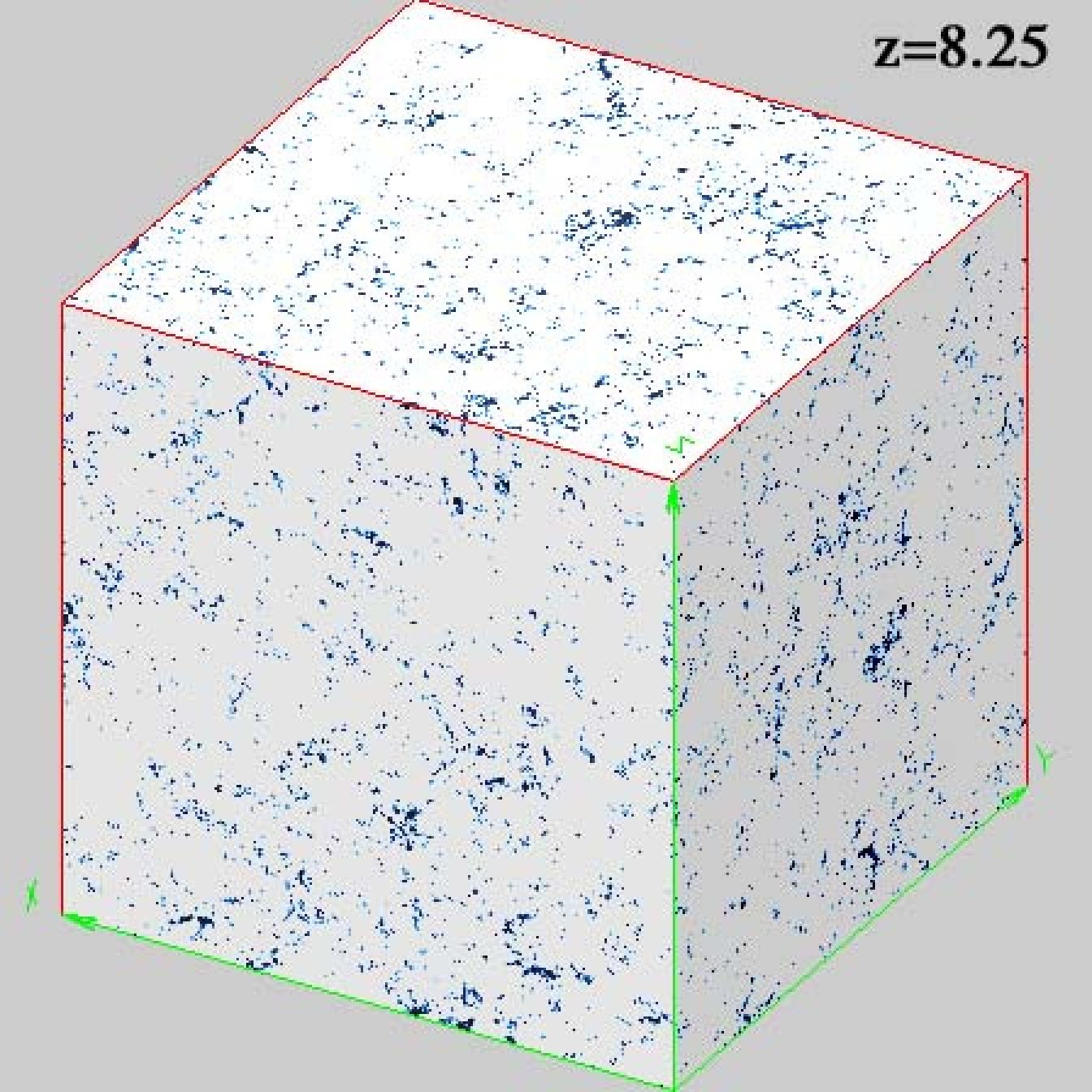
Efficient, accurate, publicly-available simulation code to compute cosmic fields during the first billion years
"Model-independent" characterization of high-z galaxies, so as to infer their properties from data
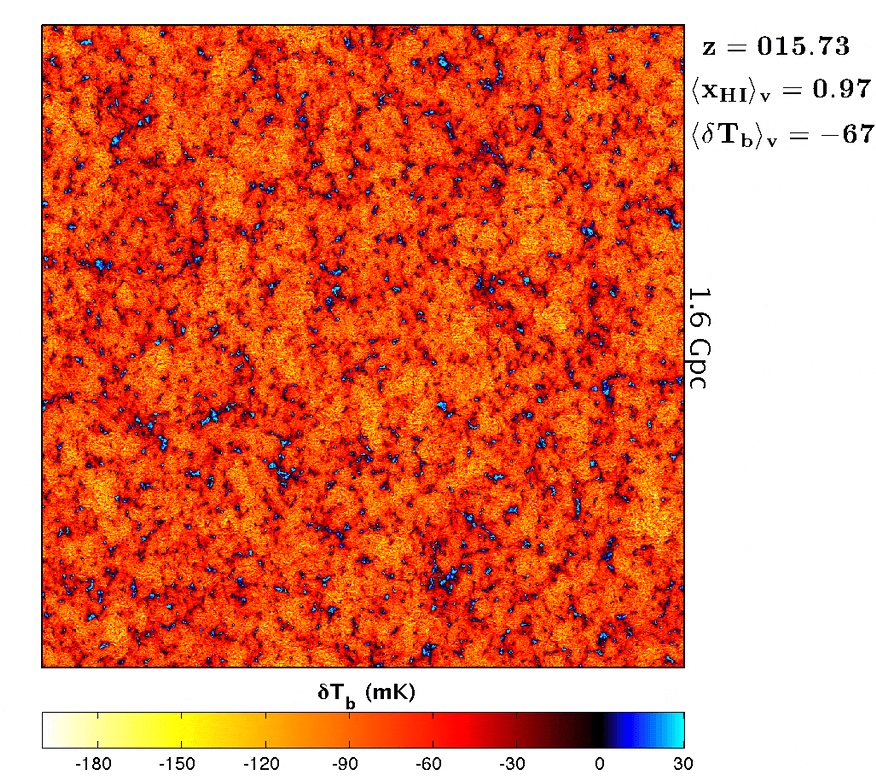
The most powerful probe of the first billion years, we will eventually make a 3D map our observable Universe using the 21cm transition of hydrogen
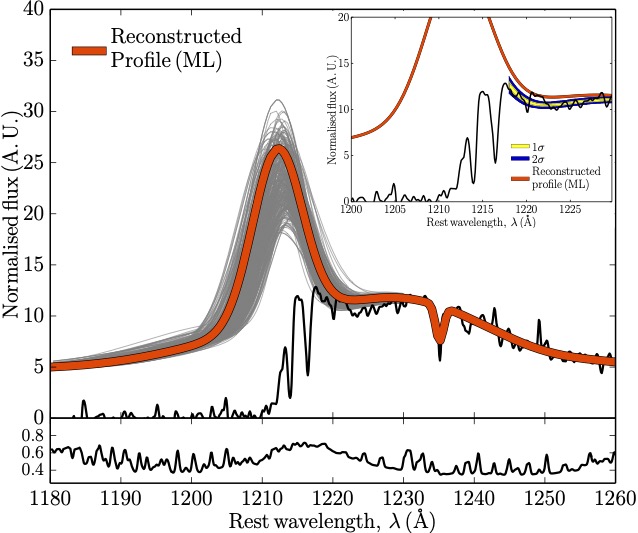
Using the Lyman alpha line to measure the ionization state of the IGM
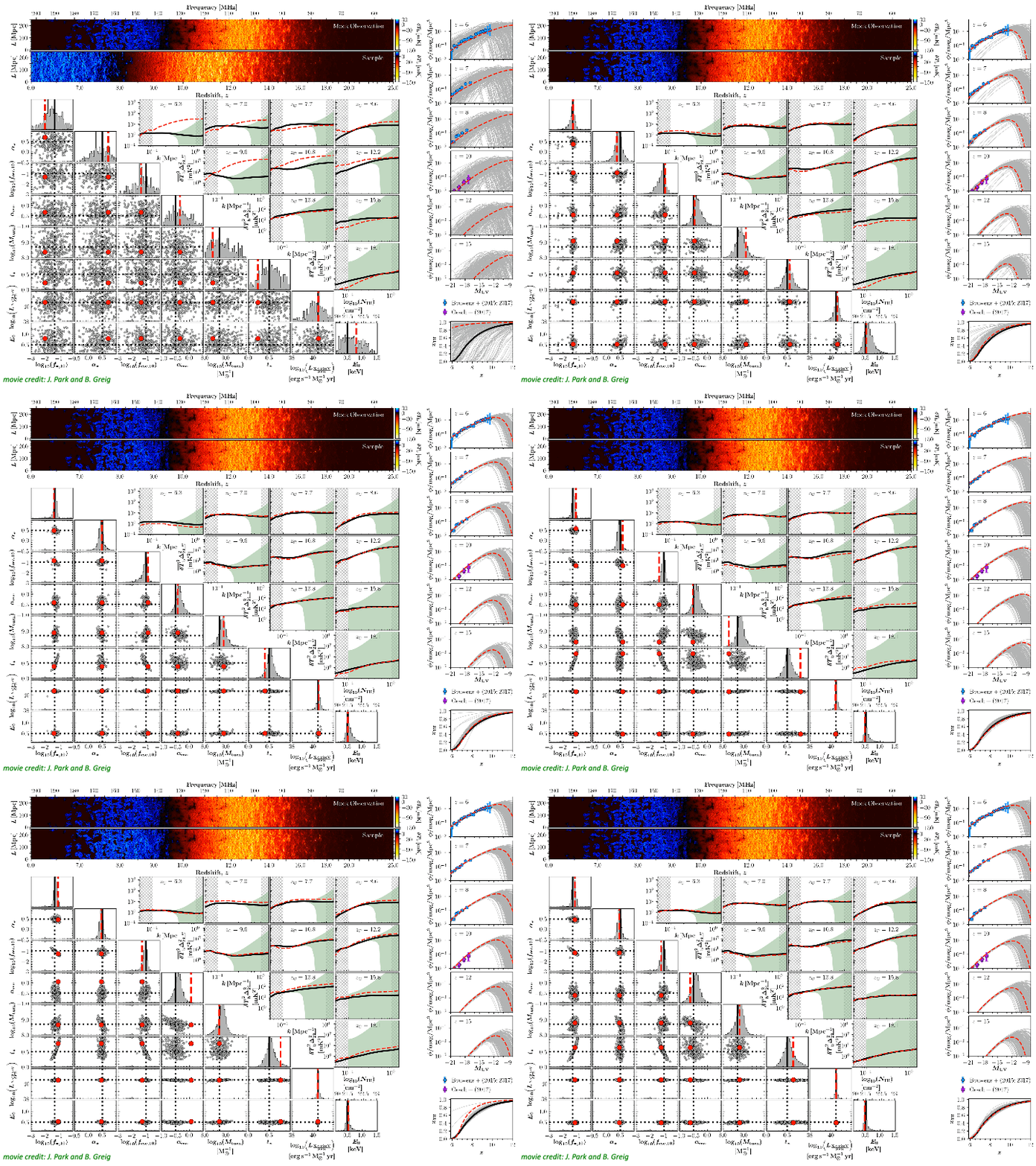
How do we extract information from complex data using advanced statistical methods?
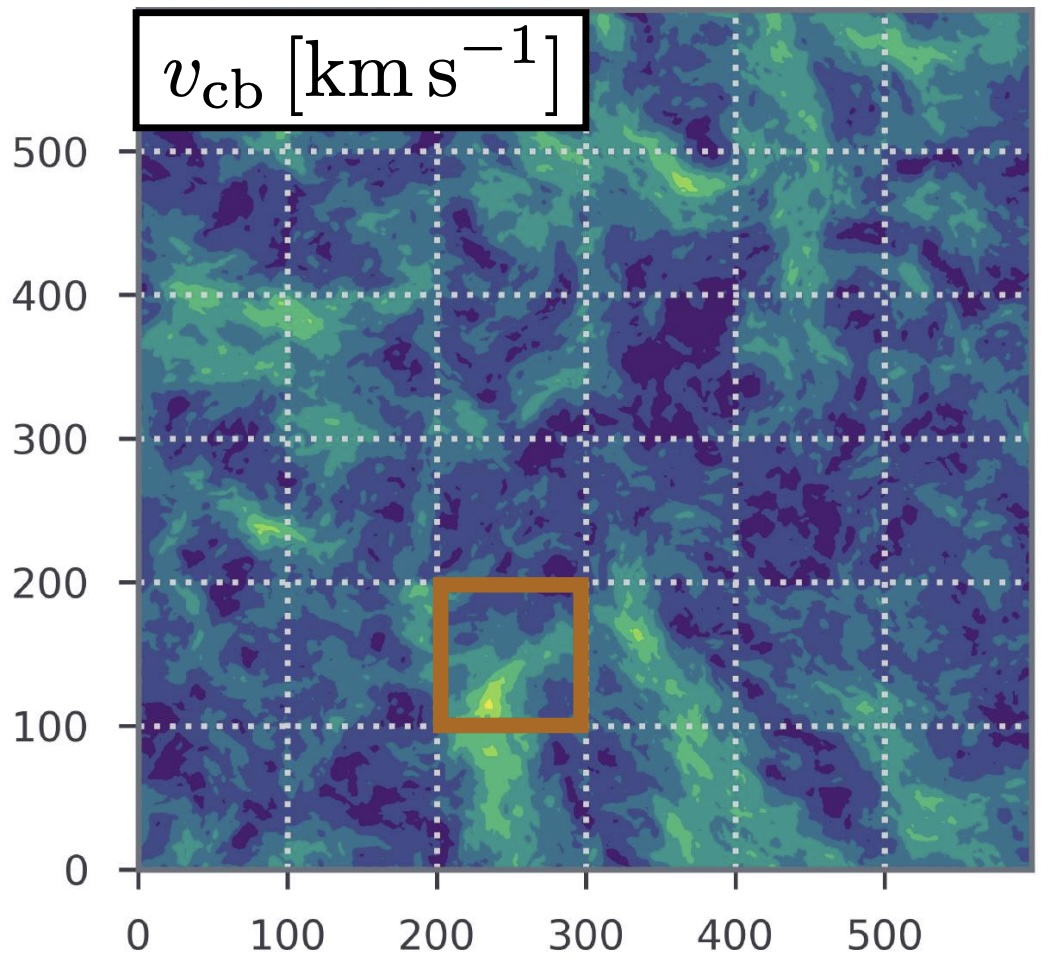
Testing Dark Matter and Dark Energy with early structure formation
>200 peer-reviewed publications since 2004
>14k citations; 3.4k citations normalized by author number; (source: NASA ADS Database)
h-index of 68; i10 index of 166; i100 index (>100 citations) of 43 (source: NASA ADS Database)
See full list of publications on NASA ADS.
Understanding the Epoch of Cosmic Reionization: Challenges and Progress,
Astrophysics and Space Science Library, Springer Publishing (2016). ISBN 978-3-319-21957-8
The Cosmic 21-cm Revolution: charting the first billion years of our Universe,
Institute of Physics (IOP) Publishing (2019). ISBN 9780750322348